
From Manufacturing to Medicine: How AI is Transforming the Business Landscape
I sometimes use affiliate links in content. This doesn’t cost you anything but I may make a commission payment from anything you buy through these links. As an Amazon Associate I earn from qualifying purchases. All opinions remain my own.
Artificial intelligence (AI) is no longer confined to the realms of science fiction, but has emerged as a transformative force in the business world. From online commerce and manufacturing to the health industry, AI’s influence is pervasive, driving innovation and efficiency.
It’s revolutionizing operational processes, personalizing customer experiences, aiding in crucial health diagnostics, and steering advanced manufacturing techniques. This article delves into the practical applications of AI across these diverse fields, illustrating how this groundbreaking technology is positively reshaping business landscapes.
Table of Contents
AI in Online Businesses
In the realm of online business, AI has proven to be particularly transformative when it comes to content creation, SEO, and targeted advertising. For instance, AI algorithms offered by companies like BrightEdge provide data-driven insights that optimize SEO by identifying popular keywords, trending topics, and user behavior patterns. This level of detail allows businesses to enhance their website ranking and visibility within search engine results.

Targeted advertising, too, has been revolutionized by AI. Platforms like Facebook and Google use complex AI systems to analyze user activity and demographic information, allowing for highly targeted, personalized ad campaigns that resonate with individual interests and needs. This level of precision not only increases conversion rates but also enhances the consumer experience by aligning advertisements with the interests of the viewer, thereby creating a win-win situation for both businesses and consumers.
AI in customer service
Chatbots have become a crucial fixture in the customer service landscape, powered by AI to provide round-the-clock assistance. Companies like Zendesk utilize intelligent chatbots to instantly respond to customer queries, process orders, and provide personalized product recommendations.
These AI-powered virtual assistants are available 24/7, addressing customer needs in real-time and without the limitations of human interaction hours. This ensures that businesses can deliver seamless, efficient service at any time of the day, enhancing customer satisfaction and loyalty.
By leveraging AI in this way, businesses can streamline their customer service operations and offer a superior, tailored customer experience that drives repeat business.
AI in the Health Industry
Artificial Intelligence is making a significant impact in the health industry, particularly in the realm of diagnostics. One key area where AI is showing immense potential is in the identification of patterns in medical imaging.
For instance, Zebra Medical Vision, an AI-based medical imaging startup, uses machine learning algorithms to read and identify disease patterns in CT scans, X-rays, and other imaging techniques. By analyzing thousands of patient imaging data, Zebra’s AI can accurately predict a range of diseases from cardiovascular conditions to liver disease.

This accelerates the diagnostic process and reduces the chance of human error, ensuring timely and accurate treatment for patients. The use of AI in medical imaging vividly illustrates how AI can be harnessed to improve patient outcomes and efficiency in the health sector.
AI in patient care
AI is also being leveraged to enhance patient care beyond diagnosis. It’s being used to monitor ongoing patient health and predict potential risks before they become critical. For instance, Google’s DeepMind Health project is working on an AI-based system to predict patient deterioration. The system uses machine learning algorithms to analyze patient data, such as vital signs and medical history, to predict potential health risks and inform healthcare professionals in real time.
Similarly, IBM’s Watson Health uses AI to analyze various data points from patient records, physician notes, and medical literature to provide personalized, evidence-based treatment options. This allows physicians to make more informed decisions about patient care and empowers patients with information about their health status and treatment options.
These examples highlight the potential of AI in facilitating proactive healthcare, enabling early intervention and personalized care that could significantly improve patient outcomes.
AI in Manufacturing
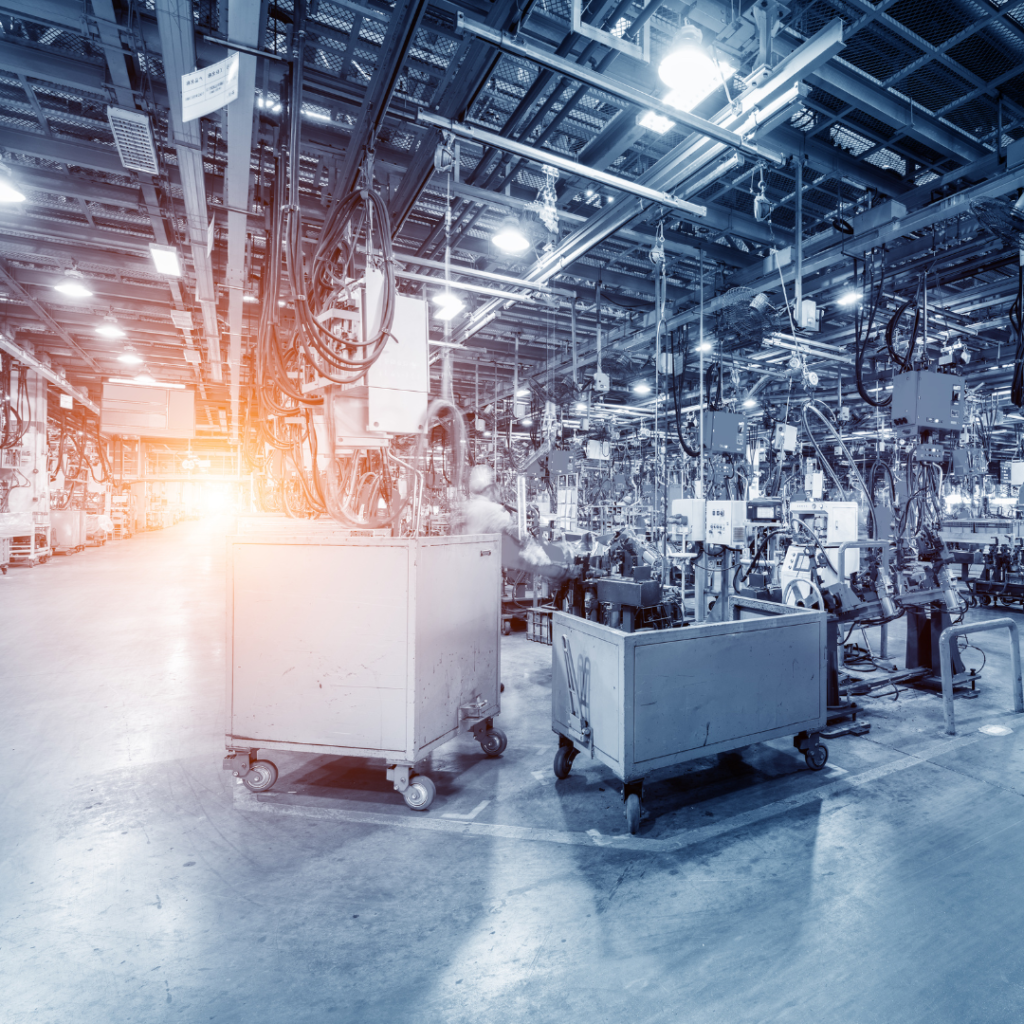
AI is proving transformative in manufacturing processes, particularly in assembly lines where precision and efficiency are paramount. AI-powered assembly lines, such as those deployed by Industrial Vision Systems, conduct intricate assembly tasks with a level of accuracy that surpasses human capability.
Industrial Vision Systems uses AI-based vision systems to scan and assemble parts with extreme precision, reducing the margin for error and significantly improving product quality. The system can identify and rectify defects in real-time, thereby mitigating wastage and enhancing overall operational efficiency.
Moreover, these AI-powered systems operate continuously without fatigue, minimizing downtime and boosting productivity. This application of AI in production processes illustrates how AI can elevate manufacturing operations to a new level of efficiency and precision, promising substantial advantages for businesses in this sector.
AI in quality control
In the realm of quality control, AI’s contributions are undeniably invaluable. Machine learning algorithms are now being employed to detect defects in products more accurately and much faster than the human eye.
For instance, companies like Landing AI have developed an AI-powered visual inspection system designed to identify even the slightest anomalies in products. The system uses machine learning to analyze thousands of product images, learning to detect defects with pinpoint precision over time.
By spotting these defects, businesses can rectify issues before the products reach the market, thereby ensuring consistently high-quality offerings, protecting their reputation, and enhancing customer satisfaction.
This use of AI in quality control is visionary, transforming traditional quality assurance processes and setting a new benchmark for product excellence.
Should We Be Worried by AI in Business?
The concerns surrounding the integration of AI in business are often rooted in misconceptions and a lack of understanding about what AI truly is and what it can accomplish. Rather than replacing human labor, AI is more about augmenting human capabilities and enabling us to work smarter.
For instance, the automation of routine tasks frees up employees to focus on more complex and creative aspects of their jobs. Furthermore, AI systems like those used in medical diagnostics or quality control can perform tasks with a level of accuracy that surpasses human capability, thus reducing errors and enhancing efficiency.
It is important to see AI as a tool that complements human skill and ingenuity, rather than a threat to human employment. As with any technological advancement, education and adaptation are key to leveraging the benefits of AI in business.
Conclusion
In conclusion, the positive impacts of Artificial Intelligence in these sectors are profound and multifaceted. AI has revolutionized digital marketing, enhancing the precision and personalization of advertising strategies. It has transformed customer service operations, enabling 24/7 assistance and fostering superior customer experiences.
AI’s potential is vast in the health sector, ranging from advanced diagnostics to personalized patient care. Manufacturing has also seen significant advantages from AI implementation in assembly lines and quality control, with increased precision, efficiency, and productivity.
Looking ahead, the possibilities of AI are virtually limitless. In the realm of digital marketing and customer service, we could see even more sophisticated personalization strategies and AI-powered virtual agents. For healthcare, AI may pave the way for more proactive patient care, predicting health risks before they emerge. In manufacturing, AI could automate even more complex processes, achieving unprecedented levels of efficiency and quality control.
The advent of AI signifies a monumental shift in the way we conduct business, administer healthcare, and manufacture goods. Its future promises even more breakthroughs that could fundamentally reshape these sectors. As we continue to harness the power of AI, it is essential to remain mindful of its potential and vigilant of its challenges, ensuring we maximize its benefits while mitigating any potential risks.