

How to Research Blog Post Topics: The Best Tools and Tips
I sometimes use affiliate links in content. This doesn’t cost you anything but I may make a commission payment from anything you buy through these links. As an Amazon Associate I earn from qualifying purchases. All opinions remain my own.
Do you ever find yourself struggling to come up with ideas for blog posts? It can be tough to come up with new and interesting topics to write about, especially if you’re stuck in a blogging rut. In this blog post, we will look at some tips and tools that can help make the process of researching blog post topics a little easier. We’ll also look at how to use those tools to come up with informative and engaging content for your readers!
Table of Contents
Brainstorming Topics
The first step to compiling a list of the blog content topics you want to cover on your blog is to start with some general brainstorming. There are three main types of blog post topics – industry, user or problem-related, and product or service related.
1. Industry Topics
The content you create can help you attract people who are genuinely interested in your sector, seeking trends, or looking to apply best practices.
Some questions to ask to find topics include;
- What topics are most discussed in your industry?
- What are the latest trending topics?
- What do the industry experts discuss?
- What topics are the most controversial?
So for this blog, I would start with topics such as ‘content marketing’, ‘social media marketing’ and ‘search engine optimisation’.
2. User-problem-related Topics
Creating material around these ideas may help you attract individuals who are seeking to solve a problem or profit by overcoming it.
You may also apply these topics to ‘issue or opportunity’ labels. Start by addressing your target audience’s pain points, and then focus on the benefits they may gain from a solution to that problem. Consider what questions they most frequently ask and what ultimate goals they want to achieve.
Some questions to ask to find topics include;
- What problems do people suffer from in your industry?
- What fears do they have?
- What are they trying to achieve?
For this blog, some examples of blog post ideas and topics might be’ how to start a blog’,’ how to create a social media strategy for Instagram’ and how to decide what theme to use on a WordPress site’.
3. Product/service-related Topics
Creating information on such themes might assist you in getting the attention of those who are seeking a solution to their difficulties. Consider the problems that people are searching for and how they locate them.
Some questions to ask to find topics include;
- What products/services are you competing with?
- How do users search for a product like yours?
- What products/services are popular in your industry (even if you don’t compete with them directly)?
For this blog, that could lead to topics such as ‘how to hire a freelance writer’, ‘when to outsource your social media marketing’ or ‘where to buy the best Pinterest pin templates“.
What to do next: Collect all of the themes you’ve discovered in a file with your pillar topics. Make sure each one has a data source next to it. This column will assist you in prioritizing your subjects, determining where to get more information, and thinking about distribution options.
Collecting Competitors’ Keywords
The next step is to look at subjects that your direct and indirect competitors have covered. Even if they don’t sell a product similar to yours, industry blogs are rivals. If you want to attract organic traffic on matters relevant to your target audience, you should monitor them.
Finding Trending Topics
Now, look for current events in your sector that are generating a lot of interest. For this stage, you’ll need tools to help you find organic trends your audience has shown an interest in. Newsjacking is an effective method of covering hot issues.
Best tools to help research blog post topics
The good news is that a range of free and paid tools are out there to help with the process. Let’s look at a few to give you some ideas of which ones might work for you.
SEMRush (Paid)
If you’re serious about marketing your business online, you need to use SEMRush. It’s one of the most comprehensive and powerful digital marketing tools on the market, and it can do everything from keyword research to competitor analysis to checking your blog post ranking.
Plus, with SEMRush’s Topic Research Tool, you can quickly and easily generate tons of ideas and information around any topic you want to write about. Just type in a topic and the tool will provide you with tons of data and ideas to help get you started.
Ahrefs (Paid)
Ahrefs is a popular, premium SEO tool that lets users track and optimize their search engine rankings. It has features like a site explorer, keyword explorer, blog auditor, and more.
The Content Explorer feature is especially helpful for quickly coming up with new topic ideas. Simply enter a topic idea into the search field, and the Content Explorer will find and analyze the top-performing content related to your topic. Results can be sorted by organic traffic, referring domains, domain rating, social shares, and traffic value.
With each result, users can also dive into more details like the word count, backlinks, and organic keywords. These insights help users improve their blogging strategy and create content that beats their competitors.
AnswerThePublic (Limited Free)
AnswerThePublic is a keyword tool that helps you generate content ideas in the form of questions. Just enter a topic you want to write about, and the tool will display questions and suggested searches in the form of a visual cloud.
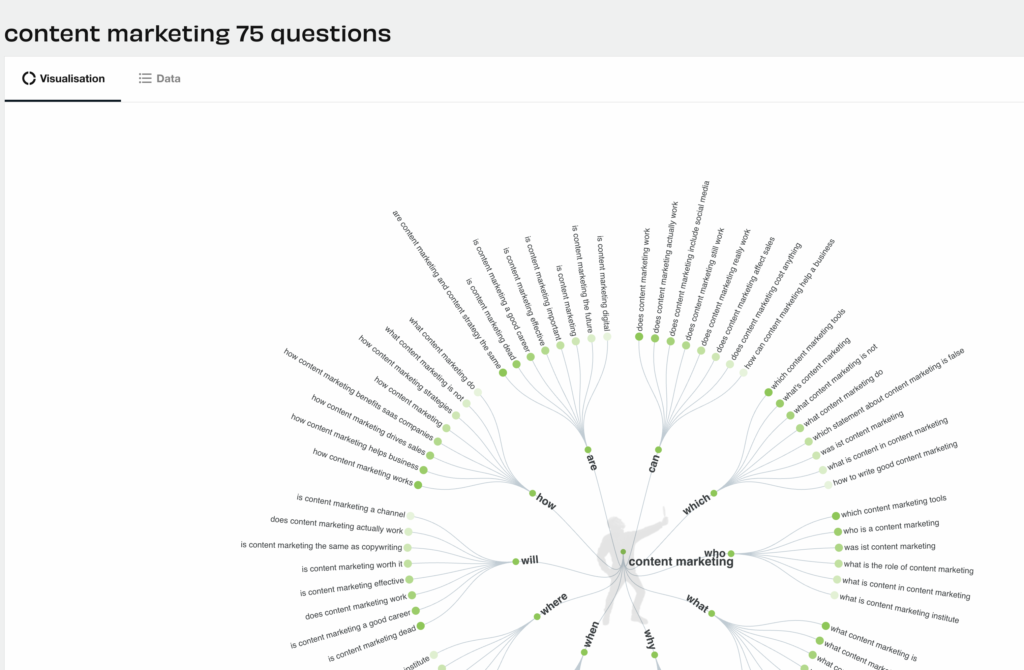
Aside from questions, you can also view results for prepositions, comparisons, alphabeticals, and related searches.
This tool can be extremely helpful when it’s challenging to come up with fresh blog topics. Knowing the questions and keywords your readers search in Google can give you a better understanding of your audience and help you create blog topics that answer their questions and provide solutions to their problems.
BuzzSumo (Limited Free)
If you’re looking for insights into what content is resonating with readers in your niche, BuzzSumo’s Content Analyzer tool is a useful resource. It shows you which blog posts are being shared the most on social media platforms like Facebook, Twitter, and Pinterest.
This information can help you generate ideas for new content that are more likely to perform well on social media.
You can filter the results by time period, and if you have a YouTube channel, there’s also a YouTube Content Analyzer that will pull the top videos related to your topic. These insights can give you a better understanding of what content is resonating with your audience so you can produce similar content that will perform well on social media.
Ubersuggest (Limited Free)
If you’re looking for a free keyword research tool, Ubersuggest is definitely worth checking out. It allows you to look up different keywords and spy on your competitors, which can be extremely helpful when trying to develop new content ideas.
The best part is that you only need to enter your keyword once – Ubersuggest will automatically generate a list of related keywords, along with important data like volume, trend, SEO difficulty, and more.
You can also view the Google Search Results for each keyword, which is a great way to see what’s already ranking in the top 10 positions.
And if you need even more inspiration, Ubersuggest’s Content Ideas section displays popular content from across the web that has received a lot of social media shares.
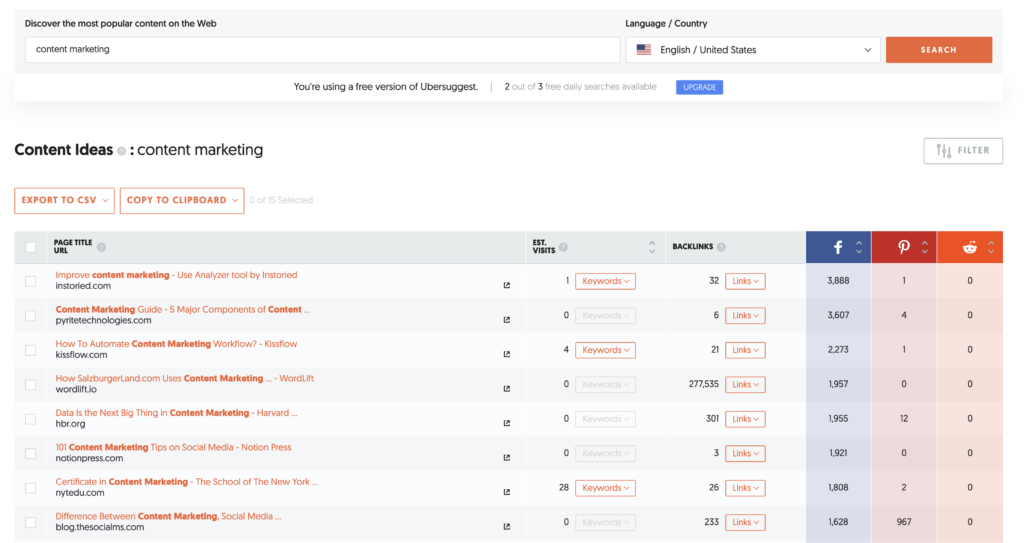
While you only get 3 free searches per day with the free version of Ubersuggest, it’s definitely worth upgrading to a premium plan if you need more searches and features.
Google Trends (Free)
Google Trends is a free data exploration tool that analyzes the popularity of search queries in Google. It tells you what search terms are popular across various regions, languages, and time periods, so you know what’s trending in your industry.
This tool is a great way to gain insight into what people are searching for and what trends they’re currently interested in. Then, you can apply these trends to your content marketing strategy and create blog posts that are relevant and timely.
Along with keyword trends, you can also view the trends for images, videos, stories, and even Google shopping. If you like to write about current or seasonal topics that are time-sensitive in nature, then Google Trends is a valuable resource for you.
Quora (Free)
Quora is a popular question-and-answer platform where users can ask anything they want and receive answers from other users. Because it’s full of questions, it’s a great method you can use to generate helpful blog ideas.
You can see questions asked by your target audience, so you know what they’re curious about and what they need help with. For example, if you run a blog that’s all about WordPress, you can find out what WordPress beginners are struggling with and create blog posts to answer their questions.
Plus, by setting up a Quora profile and answering users’ questions, you can establish yourself as an authority in your industry. And if you optimize your bio and profile, you can promote your blog and drive more traffic to your site.
WriterZen (paid)
WriterZen is the tool I’m currently working with, and it offers a number of content marketing options in one tool. The one that helps most with researching blog post topics is the Topic Explorer.
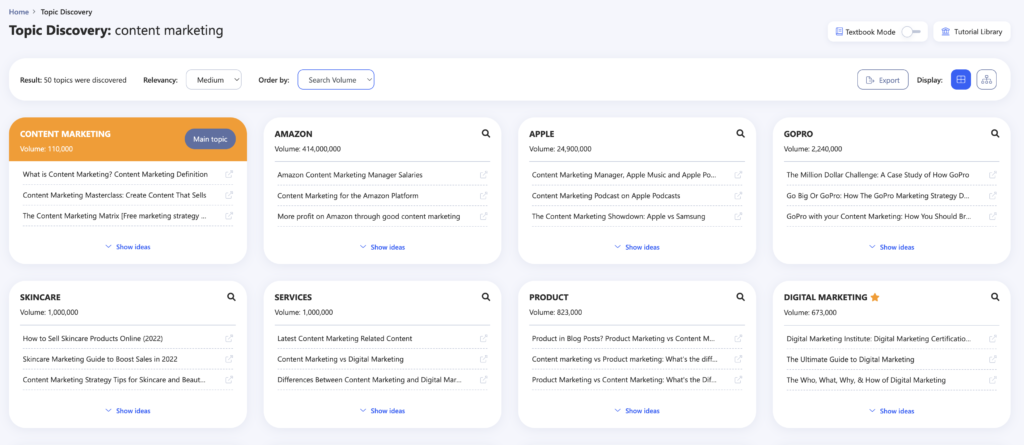
Here you can add a keyword such as ‘search engine optimization,’ and you’ll get a wide range of top ranking related topics. You’ll also get a list of keywords that feature in these articles and a range of topic article titles that are great for topic inspiration.
The feature is part of the paid plan that also includes keyword research and content planning tools, so it can cover all of the elements of content planning and optimisation.
Surfer SEO (paid)
Until recently, the Content Planner from Surfer SEO was available for free, but sadly this seems to have been removed and is only available if you have one of their paid plans.
Surfer SEO is another multi-tool option with content optimization and AI writing facilities. It is great if you use something like Jasper, the AI content assistant, as it integrates directly, and you can view your content score as you create it.
For research purposes, the content planning area is one of my favourites and allows you to get a cluster of topics for a keyword with related longer tail keywords grouped by them.
Actioning your topic research
Once you have a list of topics and sub-topics that you want to cover in your blog posts, you are ready to start keyword research. This is where you focus on the exact relevant keywords you want to target for each topic and allows you to build your topic cluster and authority with Google.
More From Skylarck virtual Services:
10 Top Typography and Font Trends
4 Reasons You Should Start Using Roundup Posts (and How to Do it)