How to Create Great Blog Posts When You Don’t Have Much Time
I sometimes use affiliate links in content. This doesn’t cost you anything but I may make a commission payment from anything you buy through these links. As an Amazon Associate I earn from qualifying purchases. All opinions remain my own.
One of the biggest problems that many bloggers have is that they don’t have all day to dedicate to writing their blog posts. Even I don’t – I have client work, I have other responsibilities and even without having kids, I still don’t have all day to leisurely write each post. So how can you create great blog posts when you don’t have much time?
Table of Contents
Create a system
The thing that made a big difference for me was when I started batching my jobs including the writing of the posts. I don’t feel like I’m constantly writing posts and can concentrate on other parts of the whole blogging business. And I’m starting the see better results so the quality of the content I’m writing mustn’t be slipping (you can tell me if it is though!)

The key to success with batching and also to creating blog posts when you don’t have much time is to have a system. Here’s one example from the Wordstream blog:
- Plan the post – choose the topic, create an outline, do your research and check any facts
- Create the headline that will capture reader’s attention
- Write the post – either a draft in a single session or in sections
- Find images to go with it
- Edit the post, reading it aloud to check its flow and even have someone else read it for you
Another idea of how to create a system focuses on the actual writing of the post:
- Use a simple structure such as a list post
- Create a benefit-driven headline that will attract readers
- Create a list of tips and select which ones to make into subheaders
- Create an inspiring conclusion
- Finish with the introduction
Your system is entirely suitable for you and the time that you have. The key is to create a system, document it and make sure you follow it every time to get the desired results.
Batching jobs
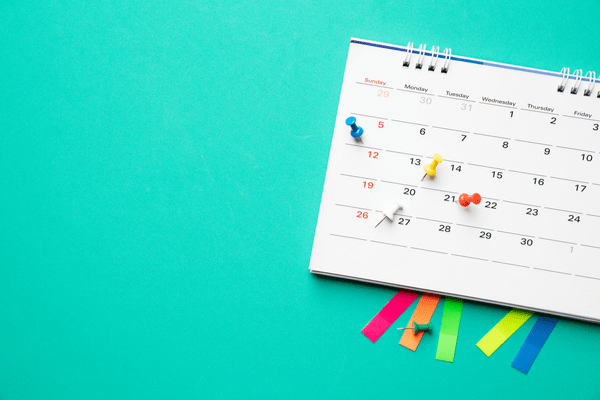
Because I have more than one blog, I’ve created a system and then allocated the jobs into my batching calendar alongside other jobs. That way when I come to write the actual posts (on a Saturday afternoon) then all I need to do is the actual writing.
Sunday – this is when I check my Trello editorial calendar for what posts need writing the following Saturday for the week after.
Tuesday – I confirm the topics and do the basic research, creating an outline of the post with headers and bullets for the main points. I usually create the headline at this point too.
Wednesday – graphics day. This is where I create pins and other graphics for the post as well as look at any opt-ins or content upgrades to go with the post. I also look for images to use in the post as well.
Saturday – write the posts and add them to the blogs, scheduling them to go out at the times and dates I regularly publish.
On top of this when the post actually goes live, I have a little checklist to remind me to do certain jobs – add it to my database on Airtable of posts, share it on social media and add the Pins to Pinterest and Tailwind.
What to write?
Another problem that people run into when it comes to creating those great blog posts when you don’t have a lot of time is that they don’t know what to write. There’s nothing more depressing than a blank page with a flashing cursor and no idea what to add to it (unless it was a full page and you lost it when the kitten jumped on the keyboard – been there and now have a very rapid auto backup schedule!)
Create a content bank
There are a few ways to combat this problem and here’s mine – I have a bank of content inspiration. I use a system where any time I spot an interesting article or something that I could use in research, I save it to Pocket. I have a Zapier integration that then carries the details to an Airtable base and I arrange them by topic.
So, when the time comes to set up my editorial calendar, I can look at the kind of topics I want to cover. Sometimes I already know but other times I need inspiration. So, I look at my bank of ideas and see what I want to write about. I even read some of the saved articles to remind myself what caught my eye.
Use a content curation tool for ideas
There are also other ways to get inspiration for your articles. Google Alerts is a useful tool where you set up a keyword search and get an email each day on any topic relating to that which has been published. Some of it isn’t relevant but there often is some that are useful.
Finally, tools like Flipboard and Feedly can be a source of inspiration. You can save feeds or websites that have good content and scroll through them in one place to see what catches your eye and inspires you.
Blog post length
One of the final reasons people think they don’t have time to blog is that they hear about the length of content that Google likes (2000-2500) and think ‘I can’t write that much’.
Let’s think about it though. Sure, there is clear evidence that Google does like longer content – it has more to search for those keywords, it gives a more comprehensive answer to the question the user asks. But not every post needs over 2000 words. Take the food blogger sharing their latest soup recipe – 2000 words would be ludicrous. Most food blog readers like a bit of story or some information about the recipe and then the recipe. They don’t need a 2000-word essay on the pros and cons of the different soup ingredients.

So, the question about post length should be more about what do your readers want? Even blogging bloggers like me don’t always want to read a 3000-word epic that takes an age to read and you forget half of it by the end.
Therefore, don’t let the post length question be the one that stops you blogging – just create quality content that answers the question your reader is asking, even if that is only 500 words.
You can write great blog posts when you don’t have much time
That’s my opinion – you can create a system, start making the most of your time and be clever about what you do. Then you can write the best blog posts when you don’t have much time – just don’t stress about it too much and don’t worry about blog post length!





Hi Angela,
While I found your content insightful, informative and relevant but at the same time, it is extremely overwhelming when it comes to Pinterest. I am fascinated, of late, by this unique platform and monetizing scope inherent in it.
As I have no website and related blogs related to this platform (though I have one which is not fit to the occasion, moreover, unable to put in adequate contents for the purpose).
So, I have decided to (if I am not wrong) to take the Clickbank affiliate program to put “direct” links to Pinterest by creating own Boards, joining other boards, using organic as well as promoted pins.
If my ideas seem to you legible for the short term gain to the least for monetizing and then opting for the next level to optimize such as Blogs/website to be more sustainable.
Please give your best tips and tricks on how to proceed on so that not to get involved in “spamming” no matter even unknowingly.
Looking forward to hearing from you.
With best regards,
Manaj Banerjee.
Hi Manaj thanks for your reply! Pinterest is definitely overwhelming sometimes which is why I often say to people to focus on the basics – getting the hang of images and keywords. Learn what your audience is searching for and that will help you get your content in front of them. As for your idea with Clickbank, I can’t really comment as I’ve never used them. I would say that it is up to the individual program whether you can link directly to products via Pinterest or not. So I would check with them and make sure this is an acceptable way to handle links for their own rules. As for avoiding spamming, I would be careful not to share the same links too often – there are various figures out there but I follow Tailwind and they recommend at least 90 days before adding the same pin to the same board again. Of course you can always make multiple pins with different descriptions leading to the same link. Again, depends on the program you are working with and if they provide a range of images or now. Hope this helps a bit!
All the best! Angela